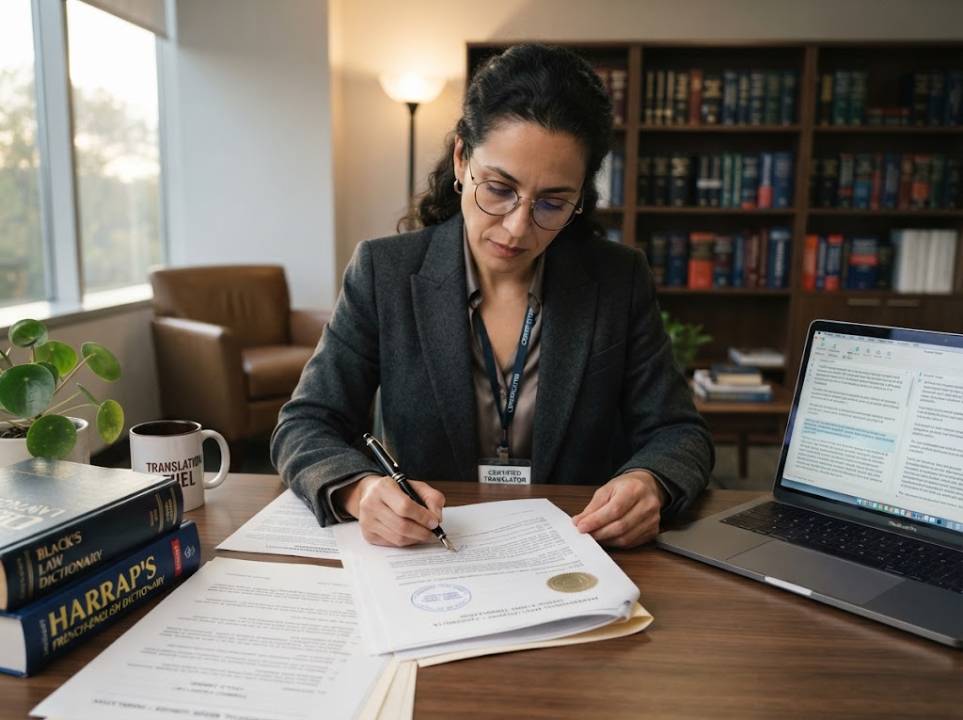
A single word out of place in a legal document can unravel months of negotiation. That is why businesses expanding across borders treat translation quality as a risk-management issue, not a formatting detail.
Where Ordinary Translation Stops Being Enough
Marketing copy tolerates a loose translation. A signed contract, an immigration application, or a court filing does not. The moment a document needs to be accepted by a government office, a bank, or a judge, accuracy alone is not sufficient. It needs a paper trail proving the translation is faithful to the original.
That paper trail is exactly what separates a routine translation from a certified one.
Contracts That Cross Borders Need More Than Fluency
Companies signing agreements with partners abroad increasingly turn to legal document certified translation services to ensure every clause carries the same legal weight in both languages. A translator without legal training can miss the difference between two terms that sound similar but carry very different obligations under local law.
Portuguese-Speaking Markets Are Growing Fast
Brazil alone represents one of the largest economies actively courting foreign investment, and businesses entering that market often need certified translation portuguese for incorporation papers, tax records, and supplier contracts. Skipping this step tends to cause delays at exactly the stage where speed matters most.
A Rising Need For Ukrainian Language Support
Relocation, humanitarian sponsorship programs, and new business formation have all driven demand for a reliable english ukrainian translator for everything from academic transcripts to employment contracts. Immigration and HR departments that plan for this in advance avoid bottlenecks when volume spikes unexpectedly.
What Happens Without Certification
The U.S. Citizenship and Immigration Services (https://www.uscis.gov) explicitly requires certified translations for foreign-language documents submitted with immigration applications, and rejects submissions that do not meet this standard. A missing certification is not a minor paperwork issue. It can mean restarting an entire application process from scratch.
Building Translation Into Your Process, Not Bolting It On
Businesses that treat certified translation as a routine step, built into onboarding and contract review from the start, avoid the scramble that comes from discovering a requirement only after a deadline is already close. A short checklist at the intake stage catches most of these needs before they become emergencies.
Who Actually Needs To Be Involved
Certified translation is not only a legal department concern. HR teams handling international hires, finance teams reviewing foreign supplier invoices, and sales teams closing deals abroad all run into moments where an uncertified document simply will not be accepted. Building a short internal guide on when certification is required, shared across departments, saves everyone from learning the rule the hard way during a deadline crunch.
Companies rarely think about document certification until a bank, registrar or customs office refuses what they submitted. Working with a provider that offers certified translation services from the start removes a whole category of administrative risk from cross-border operations. The cost sits closer to a filing fee than to a legal bill, and it is paid once rather than twice.
The Cost Of Getting It Wrong
A rejected filing rarely just costs the price of a resubmission. It costs time: weeks or months waiting for the next available appointment, the next court date, or the next visa interview slot. For a business closing an acquisition or a family navigating an immigration process, that delay can be the difference between a deal closing on schedule and a deal falling apart.
Choosing a translation provider with a documented certification process, rather than assuming any bilingual freelancer can produce an accepted document, removes most of this risk before it appears.
What To Look For In A Provider
A credible certified translation service should be able to explain exactly what their certification statement includes, how it satisfies the requirements of the receiving institution, and what happens if a document is challenged. Providers who cannot answer these questions clearly are usually not equipped to handle documents where the stakes are high.
Timing Matters As Much As Accuracy
Even a perfectly certified document can cause problems if it arrives too late. Government offices, courts, and financial institutions often work on strict processing calendars, and a translation request submitted at the last minute puts unnecessary pressure on everyone involved. Building translation timelines into project planning, rather than treating them as an afterthought once everything else is ready, keeps deadlines realistic.
Businesses that regularly work across borders often keep a short list of trusted providers on standby specifically so that urgent requests do not turn into a frantic search under time pressure.
A Small Investment Against A Large Risk
The cost of a certified translation is almost always small compared to the value of the transaction, application, or contract it supports. Viewed that way, it stops looking like an administrative expense and starts looking like basic insurance against a costly and entirely avoidable setback.